Topsail Island Hits 100 Sea Turtle Nests, Including a Rare Green
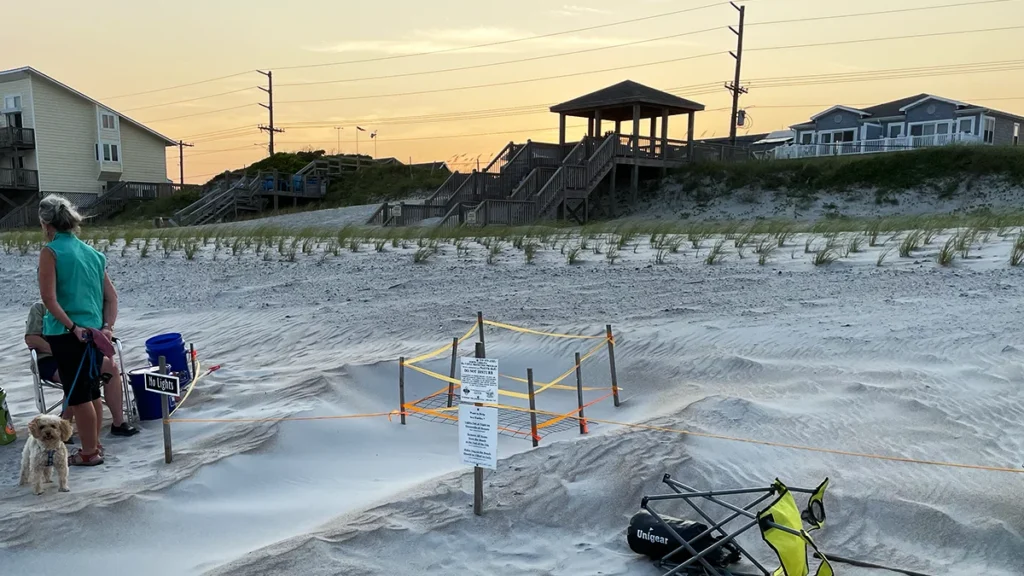
A protected sea turtle nest near Topsail Tower #3 in Surf City, watched over by Topsail Turtle Project volunteers. Photo: Topsail Guide, July 2021

Topsail Island just crossed a milestone that says a lot about the shape of this summer: volunteers have now logged 100 sea turtle nests along the island this season, and one of them is a species we rarely get to write about here.
That hundredth-nest mark already edges out all of last year. In 2025, the island finished the season with 91 nests total. We are still months from the finish line, and Topsail is already past that number.
A Rare Green in the Mix
Most of the nests dug into Topsail’s sand each summer belong to loggerheads, the big, blocky-headed turtles that are the workhorses of this coastline. So the standout this season is the discovery of the season’s first green sea turtle nest, a species that shows up on the island far less often than loggerheads.
If you cannot tell the two apart, you are in good company. The quick version: a loggerhead has a large, heavy head and a reddish-brown shell, while a green turtle has a smaller, rounder head and a smoother, more olive-toned shell. The difference matters to the people counting nests, because a green nest is a genuinely uncommon entry in the Topsail logbook, and a hopeful one.
Who’s Behind the Count
None of this happens by accident. The nests are found, marked, and protected by the Topsail Turtle Project, the volunteer program run out of the Karen Beasley Sea Turtle Rescue and Rehabilitation Center. Their people walk 26 miles of island coastline through the season, looking for the telltale tracks a nesting female leaves behind before dawn.
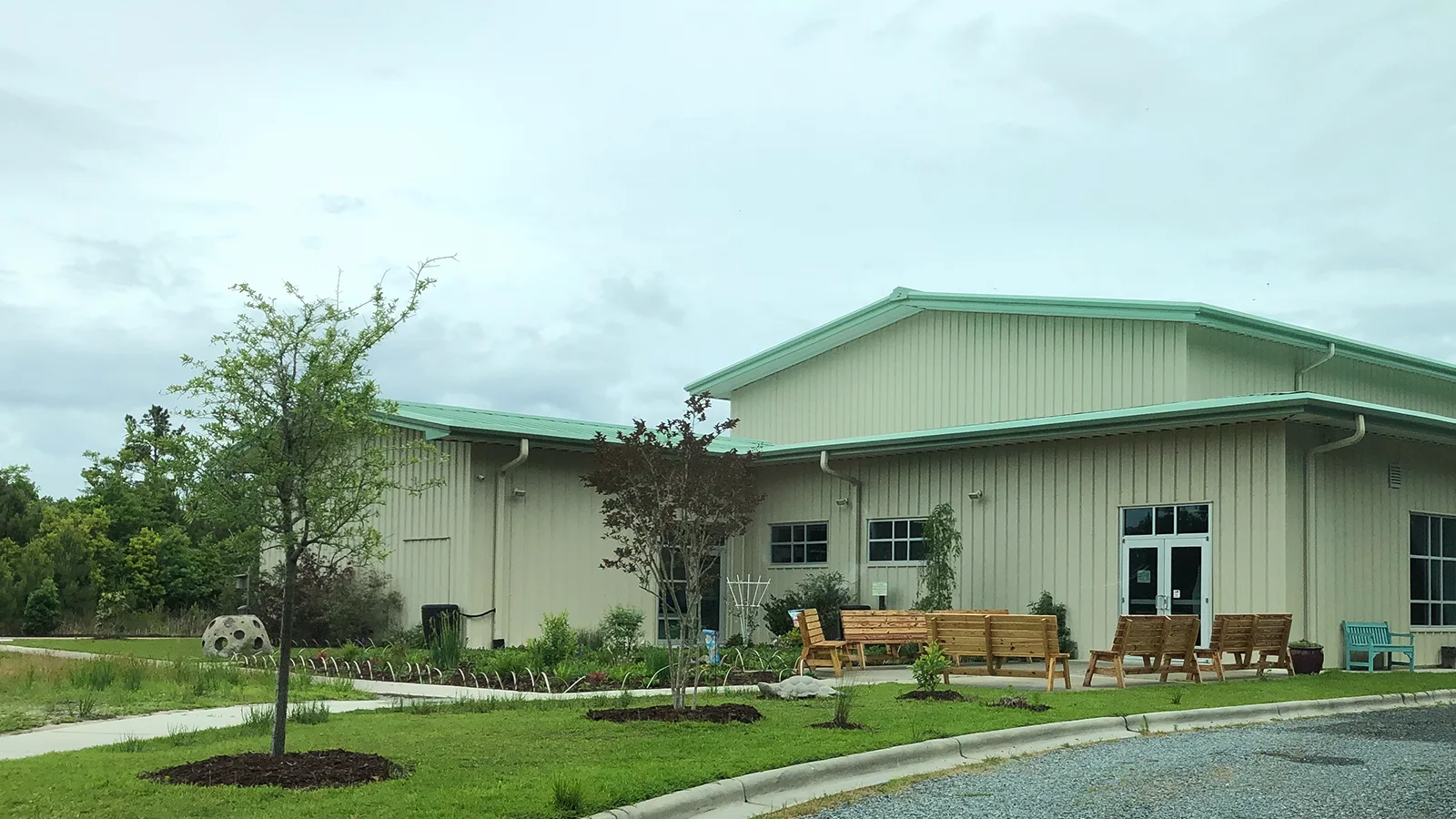
We have spent time at the Karen Beasley center ourselves, and it is one of those places that quietly explains why Topsail takes its turtles so seriously. It is a working hospital as much as a rescue, and the same organization that patches up injured adults is the one out on the beach at first light protecting the next generation before it hatches. It is also open to the public, with tours and education programs that turn plenty of first-time visitors into the volunteers who walk the beach at dawn.

Nesting season on Topsail runs from May 1 through October 31, so the count is far from final. Every clear, calm morning through the summer is another chance for a volunteer to find a fresh set of tracks.
Hatching Season Is Here
Here is why this story is worth your attention right now, and not just as a nice number. A sea turtle nest incubates for roughly two months before it hatches, which means the earliest nests of the season are starting to boil now and will keep hatching into the fall. A “boil” is exactly what it sounds like: dozens of hatchlings erupting from the sand at once and scrambling for the water, usually after dark.
That is the magic, and it is also the fragile part. Hatchlings find the ocean by heading toward the brightest, lowest horizon, which for millions of years was the moonlit sea. Porch lights, phone screens, and flashlights break that instinct and send them the wrong way. A few small habits from the rest of us make an enormous difference.
How You Can Help This Summer
- Go dark near the beach at night. Turn off or shield oceanfront lights, and skip the flashlight and flash photography on the sand after dusk.
- Fill your holes and flatten your castles. A hole or a sandcastle wall is a trap a hatchling cannot climb out of. Level them before you leave.
- Clear your gear at night. Chairs, tents, and umbrellas left out become obstacles between a nest and the water.
- Leave hatchlings alone. If you find a nest boiling, keep your distance, keep lights off, and let them make the crawl themselves. It is how they get their bearings.
- Leash the dog, and keep off the dunes. Marked nests are marked for a reason.
If you come across a nest hatching, a disoriented hatchling, or a stranded turtle, the people to call are the Topsail Turtle Project at (910) 329-0222. You can also learn more, or support the work, through the Karen Beasley center directly.
One hundred nests, a rare green among them, and a hatching season just getting started. It is a good summer to be a turtle on Topsail, and a good summer to give them a little room.
Sourced from the Topsail Turtle Project and Karen Beasley Sea Turtle Rescue and Rehabilitation Center reports, and reporting by WWAY. Nesting and hatching guidance reflects standard North Carolina sea turtle conservation practice.
Advertisement
Support local coverage: Topsail Guide is independently operated and supported by readers. If our stories and guides are useful, you can support the site here.
See something wrong? Report a correction or read our editorial standards.