NC Flounder Season 2026: Dates, Limits, and Rules for Topsail Area Anglers
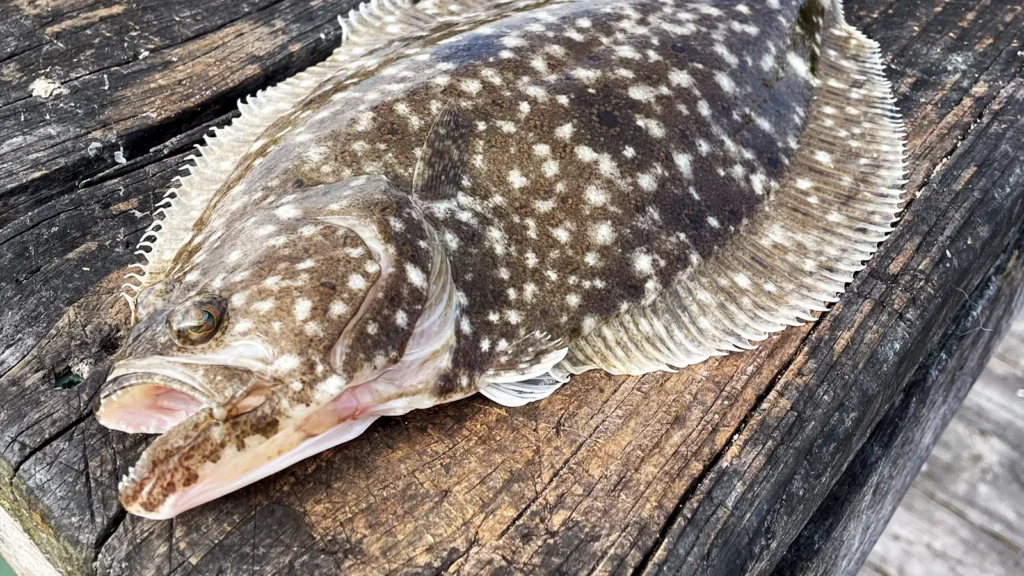

North Carolina’s fall 2026 recreational flounder season runs September 1 through September 14, the daily limit is still one fish at a 15 inch minimum, and if that’s all you needed, you’re set. But there’s a bigger story under the hood this year. The season dates didn’t move. What changed is the rulebook around them: flounder is now managed under a new state plan, kept fish have to be reported for the first time, and there was a separate ocean only season back in March that a lot of anglers never heard about. If you fished Topsail waters last September and figure the rules are the same, read the reporting section before you go. That part is new, and it’s the one that can actually cost you.
Flounder Season 2026 at a Glance
- Fall season: Opens Sept. 1 at 12:01 a.m., closes Sept. 14 at 11:59 p.m.
- Where: Internal Coastal Waters, Joint Fishing Waters, and Atlantic Ocean Waters
- Daily limit: One flounder per person, per day
- Minimum size: 15 inches, snout to tail
- Legal gear: Hook and line, and gig. Harvest with a Recreational Commercial Gear License is not allowed
- New for 2026: Every flounder you keep must be reported to the Division of Marine Fisheries
- On the water: You can’t have more than one daily limit per person aboard your boat, even mid trip
What Actually Changed for 2026
Let’s be straight about this instead of hyping it: the part of the season anglers feel on the water, the dates, the bag limit, the size limit, did not get bigger in 2026. It’s the same two week window, the same one fish, the same 15 inches it’s been. If you’re an experienced Topsail angler and someone tells you “everything changed this year,” that’s not accurate, and I’m not going to write the guide that way.
What did change is the management plan behind those numbers. The 2025 season was set under Southern Flounder Amendment 3. The 2026 season is managed under Amendment 4, which sped up a planned shift in how the total catch is split between commercial and recreational fishing, moving to a 50/50 split a full year earlier than Amendment 3 originally called for. The state’s own explanation for keeping the September dates unchanged is that regulators reviewed 2025 recreational harvest data and landed on the same window as the right balance between protecting the fishery and keeping angler access reasonable, not that they ran out of room to extend it.
Two other things are new for 2026 specifically:
- Mandatory harvest reporting is now required for every kept flounder (see below), a rule that took effect Dec. 1, 2025.
- A separate spring Gulf flounder season ran March 9 through 22, 2026, in ocean waters only. That one’s already closed for the year, but it’s worth understanding since it will likely come back on a similar schedule.
Bottom line for returning anglers: the September rules look familiar. The real 2026 story is that the state expects better accounting for what actually gets caught, and it’s managing the fishery under a faster path to an even split between commercial and recreational harvest.
Licenses and Reporting Before You Go
A few practical questions before you hit the water or the pier:
- Do I need a license? Anyone 16 or older fishing in coastal or joint waters needs a Coastal Recreational Fishing License (CRFL). Anglers under 16 don’t need one.
- What does it cost? The annual CRFL is $19 for NC residents and $38 for nonresidents. A 10 day license runs $8 resident, $14 nonresident.
- What if I’m on a charter or headboat? Most for-hire operators (charter boats, headboats) hold a for-hire blanket license that covers paying passengers, so you may not need your own CRFL. Confirm with the captain before you go.
- What about a pier? Some ocean piers carry their own coverage that lets anglers fish without an individual CRFL. Ask at the pier house before you cast, since this varies by location and I’d rather send you to the source than guess.
- When and how do I report a kept flounder? Fish you release don’t need to be reported. Fish you keep do. Report online or through the DMF app as soon as your trip is finished, using the Mandatory Harvest Reporting system. The rule took effect Dec. 1, 2025, and DMF has said non-reporting is currently in a verbal warning phase through Nov. 30, 2026, so don’t assume that grace period is permanent.
The Spring Gulf Flounder Season (Already Closed for 2026)
Here’s a piece of the 2026 season a lot of anglers missed entirely: North Carolina ran a separate recreational Gulf flounder season from March 9 through March 22, 2026, in ocean waters only, from the north end of Portsmouth Island down to the South Carolina line. That covers water well south of Topsail, so it applied here.
The rules were similar to the fall season on paper (hook and line only, one fish per day, 15 inch minimum) with one major catch: you could only keep Gulf flounder, a different species from the southern flounder most Topsail anglers are used to targeting in September. If you couldn’t confidently identify the fish as a Gulf flounder, the state’s guidance was simple: let it go. After legally harvesting a Gulf flounder in the open ocean, anglers could still run back through closed estuarine waters, they just couldn’t fish those waters while carrying the fish.
This season is over for 2026, but it’s worth knowing it exists, because it’s a real signal that “flounder season” in North Carolina is no longer just a September thing. Watch for a similar announcement heading into spring 2027.
Species ID: Don’t Guess, It’s Illegal to Guess Wrong
North Carolina’s recreational ocean fishery pulls in three flounder species together: southern, summer, and Gulf. On average, roughly half of the ocean recreational flounder harvest statewide is southern flounder specifically, which is exactly why species ID isn’t a technicality here, it’s the rule that decides whether a fish in your cooler is legal.
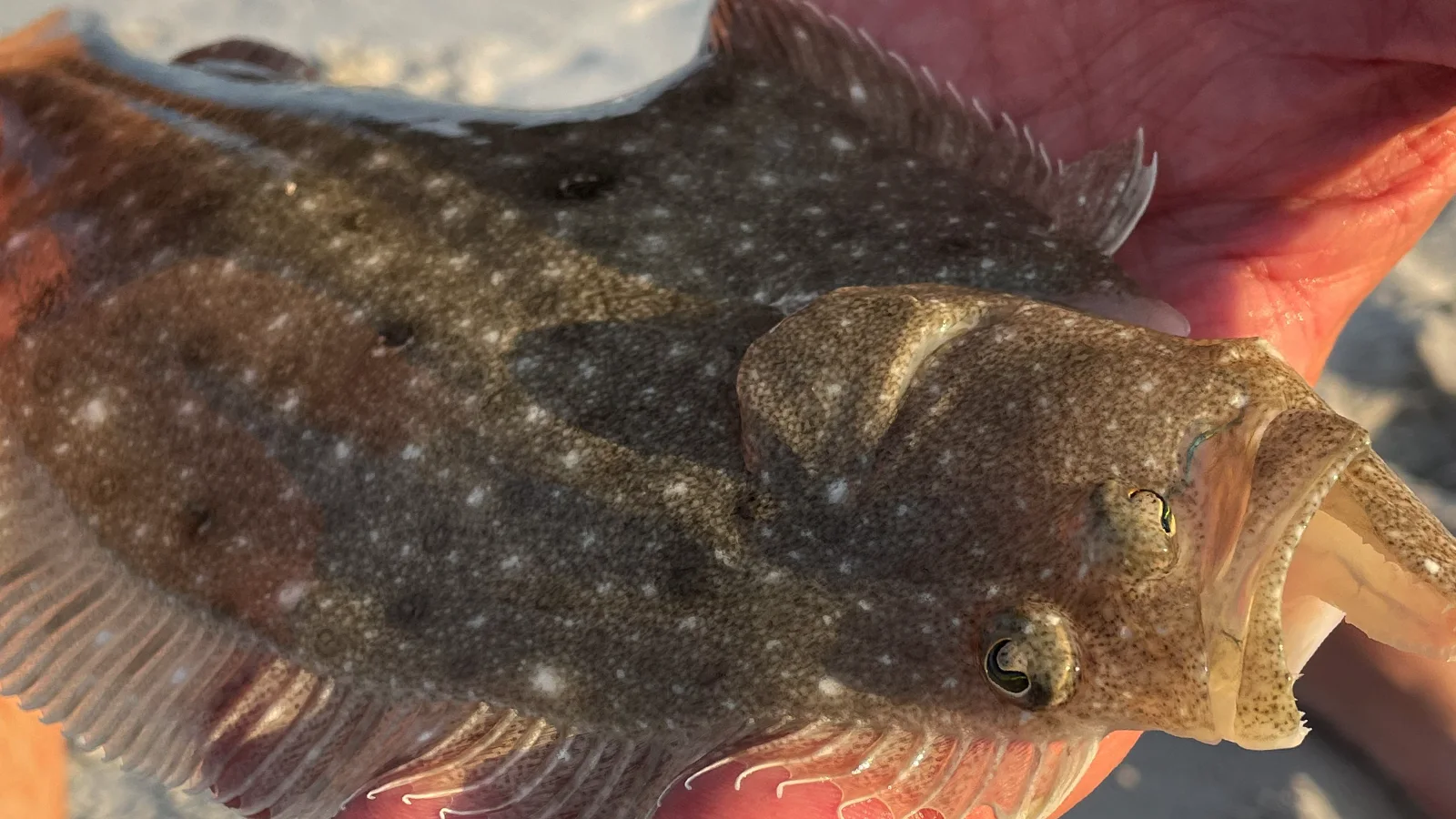
The most reliable field mark: Gulf flounder show three prominent, dark, ringed spots arranged in a triangle on their eyed side. Southern flounder don’t show that same clean triangle pattern. If you’re not confident which fish you’re holding, especially during a species-restricted season like the spring Gulf window, the state’s guidance and mine is the same: release it. The Division of Marine Fisheries publishes a full flounder identification resource worth bookmarking before you go.
How to Measure Your Catch
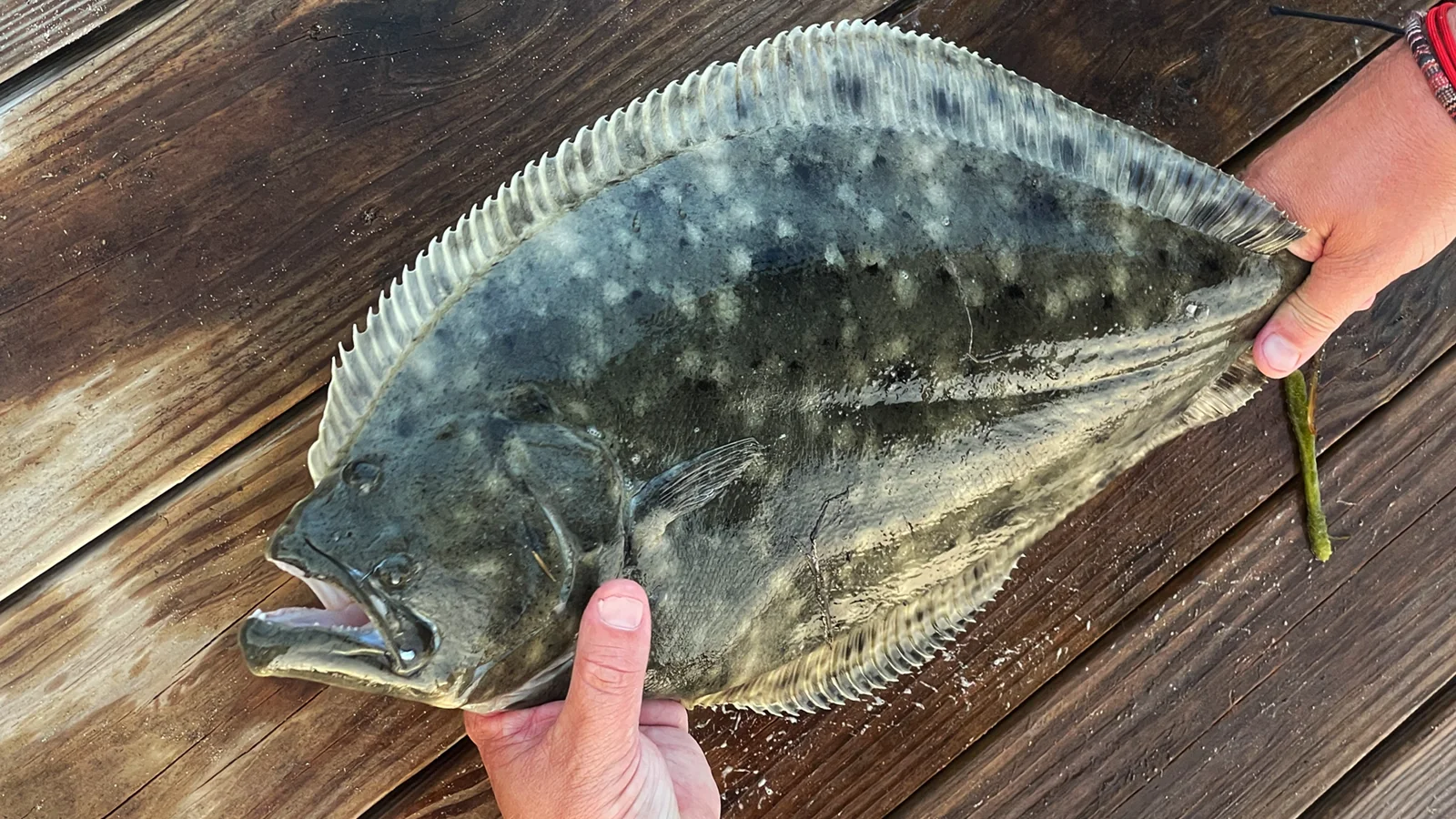
Total length is the only measurement North Carolina accepts, and it is taken a specific way. Lay the fish flat on a rigid measuring board, slide the snout against the stop at zero, pinch the tail lobes together, and read to the tip of the compressed tail.
Do not follow the curve of the body, do not use a soft tape, and do not measure across a cooler lid. The Division of Marine Fisheries defines total length as the straight line distance from the tip of the snout to the tip of the compressed tail, and that is the method an officer will use at the dock.
One practical note that costs anglers every September: flounder shrink slightly on ice. A fish that measures exactly 15 inches fresh can come up short hours later. Plenty of local anglers release anything under about 15.25 inches rather than argue the difference at the ramp.
What a Violation Actually Costs
Most marine fisheries violations in North Carolina are Class 3 misdemeanors on a first offense, carrying fines up to $200. A second conviction within three years rises to a Class 2 misdemeanor, with fines up to $1,000 and the possibility of jail time. Officers can also seize the catch and pursue license revocation.
There is a second cost, and it falls on everyone. When the recreational sector exceeds its allowable catch, the overage is paid back out of the following year’s allocation. That payback mechanism is a large part of why the season has stayed at two weeks, and it is why the one fish limit gets enforced strictly rather than loosely.
Where Flounder Hold Around Topsail
Flounder move between inshore estuaries and near shore ocean structure through the year. Around Topsail Island, sound side creeks, marsh banks and oyster rocks hold keeper fish from May into early November, with the strongest concentrations in June and again in September as the fish feed before moving offshore to spawn.
On the sound side, work creek mouths, dock pilings and the shallow ledges where flounder sit and ambush bait moving past. The water behind Surf City and Topsail Beach fishes well on a moving tide. On the ocean side, near shore reefs, ledges and live bottom a few miles off the beach hold the larger fish, and several Topsail area charter operations run to them when the weather cooperates.
Mainland access matters too. Hampstead and Sneads Ferry both offer marinas, docks and public shoreline, and the creek mouths feeding the Intracoastal Waterway produce without a boat. The New River and the Cape Fear are both within reasonable range. Pamlico Sound and the Outer Banks are well known flounder water but too far north to be practical for a day trip from here.
Gear and Technique for Hook and Line
A standard inshore spinning setup covers most flounder fishing here: a medium action rod around seven feet, 10 to 15 pound braid, and a 15 pound fluorocarbon leader.
The Carolina rig is still the most reliable presentation. Slide a half ounce to one ounce egg sinker above a swivel, tie on 18 to 24 inches of leader, and finish with a 2/0 to 3/0 circle or kahle hook. Cast near structure and work it slowly along the bottom.
The part that separates people who catch flounder from people who lose them is the bite itself. Flounder hit softly and will often hold the bait before committing. Wait for the thump, then apply steady pressure. Do not jerk.
Soft plastics work when you need to cover water. Paddle tails, curly tails and scented shrimp hopped along the bottom draw strikes around sand pockets, grass edges, bridge pilings and oyster bars. Fan cast an area before moving on, because flounder tend to group up.
From a pier, use a heavier sinker to hold the bait near the pilings, or drop straight down into the suds where the waves break. Surf City Ocean Pier keeps bait and tackle on site, and East Coast Sports is the closest full tackle shop for rigging supplies.
Baits and Lures That Produce
Live bait is still the most effective option. Finger mullet in the three to five inch range, mud minnows, small menhaden and live shrimp all stay lively and put out the vibration flounder key on. Hook through the lips or just ahead of the dorsal so the bait swims naturally.
Strip baits cut from mullet, menhaden or squid drift well along the bottom on a kahle hook, and a scent additive helps on slow days.
For artificials, soft plastic paddle tails, curly tails and jerk shads on a jig head let you work an area quickly. Chartreuse, white, pink and natural brown all match local bait. Scented soft baits are popular here because they combine movement with scent. Bucktail jigs tipped with a strip work well in deeper channels and around reef structure. Fish all of it slowly. Flounder ambush rather than chase.
Gigging: Gear, Timing and Tactics
Gigging is subject to the same one fish limit and 15 inch minimum as hook and line.
- Gig: a pole between six and twelve feet, in aluminum, fiberglass or wood, with a three prong stainless head and barbed tines. Longer poles reach deeper water but are harder to control in current.
- Light: this is the whole game. A waterproof LED headlamp keeps your hands free, and boat or pole mounted underwater lights cover more ground. Look for at least 1,000 lumens, six to eight hours of run time, and an IPX7 or better water resistance rating.
- Movement: many giggers simply wade ankle to knee deep flats in old sneakers or wading boots. A shallow draft skiff or jon boat with a push pole covers more water quietly, and a GPS anchoring trolling motor lets you stop on a fish without drifting off it.
The best conditions are a falling tide at night with clear, calm water. Low water concentrates fish on sand flats, creek mouths and marsh edges. Move slowly and look for the outline rather than the fish, since a flounder will be buried with only its eyes and part of its head showing. When you find one, position the gig directly above it and thrust straight down. On a borderline fish, pass. An undersized violation is not worth it.
Reading Tides and Conditions
Tide does more for flounder fishing here than any other single variable. The outgoing side of a high tide is the most productive window inshore, because it flushes shrimp, crabs and baitfish off the grass flats and oyster bars and pushes them past fish sitting in ambush. Cast up current and let the bait drift down naturally while keeping contact with the bottom.
Creek mouths, inlets and channels are the highest percentage spots for exactly that reason. Around docks, work a jig slowly along the pilings where the shadow line falls. On grass flats at low water, target the sandy potholes and fish each one thoroughly before moving.
Water clarity and current both matter. Heavy rain pushes fresh water into the estuary and moves flounder toward the inlets or out into the ocean where salinity holds steady. Light wind and overcast skies are ideal, and on a cloudy day the fish may feed straight through the middle of it. Current tide times and surf conditions are on the Topsail Guide weather page.
Why the Season Is Still Just Two Weeks
Anglers ask this every year, so here’s the real answer instead of a shrug. North Carolina’s southern flounder stock has been formally assessed as overfished, with overfishing still occurring. To turn that around, the state’s own analysis found a minimum 31% cut in total removals was needed just to end overfishing within two years, and a 52% cut to rebuild the female spawning stock within a decade. North Carolina chose to go further than either number: Amendment 4 keeps a 72% harvest reduction goal in place across the fishery, a target that’s been in effect since 2020 and is more conservative than the minimum required.
Two more numbers explain why the state is strict about the calendar. First, the recreational hook and line fishery has an estimated 9% discard mortality rate, meaning fish released outside the season still die at a measurable rate and that mortality counts against the total allowable catch, which is part of why DMF actively discourages targeting flounder for catch and release outside the open window. Second, recreational anglers have exceeded the total allowable catch in every year since Amendment 3 took effect. During the two week 2023 season alone, recreational harvest came in at 241,609 pounds against an adjusted allowable removal of 114,315 pounds, more than double the target. That pattern, not a lack of fish in the water, is the real reason the window hasn’t gotten longer.
Where the Stock Actually Stands
The short season is not arbitrary, and the science behind it is worth understanding before deciding how you feel about it. A 2019 stock assessment found North Carolina’s southern flounder population overfished with overfishing still occurring, and the problem is concentrated in mature females, which is the part of the stock that determines whether it recovers. The state’s rebuilding target is a roughly 72 percent reduction in removals, aimed at a rebuilt stock by 2028.
Not every flounder is in the same shape. NOAA reports that Atlantic summer flounder, which includes North Carolina waters, is not overfished, having rebounded from its 1980s low largely on the back of habitat protection. Southern flounder across North Carolina, South Carolina and Georgia remain below target. That distinction matters on the water, because the species you are holding determines which story applies.
There is also better data coming. Work under Amendment 3 includes tagging female fish to track migration and spawning movement, which should sharpen future assessments considerably.
On the allocation argument, one figure cuts through most of it: in 2024 the recreational sector exceeded its quota while the commercial sector stayed inside its own, largely because commercial landings are monitored daily. That gap in accounting is a large part of why mandatory harvest reporting now exists for anglers.
We realize that a lot of recreational fishermen feel like “I only catch one fish a year, there’s no way that I can be impacting the resource,” but there’s more than a million fishermen out there.
Tricia Smith, Public Information Officer, N.C. Division of Marine Fisheries
Donate the Carcass and Help the Data
If you keep a flounder, the frame is worth more to the fishery than the trash can. The Division of Marine Fisheries runs a carcass collection program, and researchers pull the otoliths, the ear bones, to determine the age and growth rate of the fish. That is the raw material future stock assessments are built from, and the recreational sector has historically been the thinner side of that dataset.
Leave the head and the tail intact when you drop one off. The nearest collection points to the Topsail area are Pelagic Hunter in Sneads Ferry and Intracoastal Angler in Wilmington, with additional sites statewide.
FAQ for Topsail Anglers
I caught my flounder offshore in federal water. Do NC rules still apply?
Yes. Once you’re possessing or transporting that fish through North Carolina’s coastal fishing waters, state rules control, even if you caught the fish somewhere federal rules would normally apply.
Can I keep fishing once I’ve got my one fish?
You can keep fishing, but you can’t have more than one daily limit per person aboard the vessel at any point, whether you caught it or someone handed it to you.
Do I have to report flounder I release?
No. Only flounder you keep get reported.
Does a Topsail inlet count for the spring Gulf season?
No. That season was ocean waters only. Estuarine and inlet waters weren’t part of it, and you couldn’t fish those waters while carrying Gulf flounder harvested offshore.
My kid wants to fish with me. Do they need a license?
Not if they’re under 16.
Support local coverage: Topsail Guide is independently operated and supported by readers. If guides like this one save you a headache or a fine, you can support the site here.
Sources
Regulatory
- NC DEQ, 2026 recreational flounder season announcement
- Proclamation FF-27-2026
- NC Wildlife, 2026 season notice for inland and joint hook-and-line waters
Licenses and Reporting
- NC DEQ, Recreational Fishing Licenses
- NC DEQ, For-Hire Fishing Licenses
- NC DEQ, Mandatory Harvest Reporting
Spring Season and Species ID
- NC DEQ, Spring Gulf Flounder season announcement
- NC DEQ, Flounder species profile and identification
Management and Rationale
Advertisement
Support local coverage: Topsail Guide is independently operated and supported by readers. If our stories and guides are useful, you can support the site here.
Local Listings