Local Spotlight: How Ocean Fest Is Helping Move Topsail Forward

Local Spotlight
This series highlights local people and organizations helping move the Topsail area forward. That can mean protecting the coast, supporting families, improving quality of life, creating meaningful community events, or building something that makes this place better for residents, visitors, and local businesses.
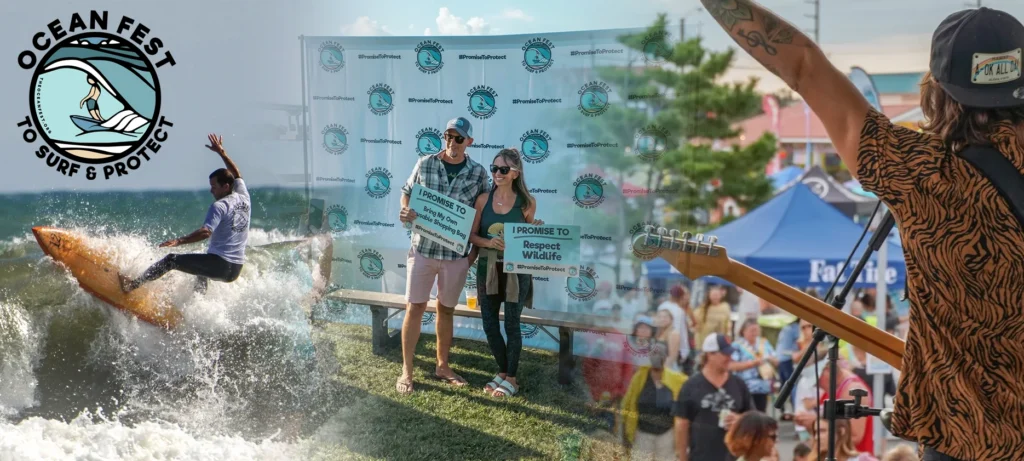
Ocean Fest made a pretty good case for this first Local Spotlight on a rainy Saturday in Surf City. The weather was lousy, but people still came out, vendors still set up, musicians still played, and the community still rallied around something bigger than a weekend event.
That is what makes Ocean Fest worth a deeper look. The festival has the visible pieces people recognize – live music, local vendors, surf culture, food, drinks, family activity, and a beach-town crowd – but the organization behind it is doing more than putting on a good time. Ocean Fest has become a local conservation nonprofit using community events to support grantmaking, environmental education, waste reduction, coastal stewardship, and local pride.
With the spring festival now behind us and early attention starting to build around its fall oyster-focused event, Oysterpalooza, this felt like the right time to look at what Ocean Fest has become, who is helping drive it, and why its impact matters across the Topsail area.
Ocean Fest Is More Than a Festival
Founded in 2019 by three surfing friends in Surf City – Mark Anders, Cory Sydes, and Cody Leutgens – Ocean Fest started with a simple local idea: celebrate the ocean, share the joy of surfing, and give something back to the coastal environment that defines so much of life here.
That idea has grown into a formal 501(c)(3) nonprofit organization. Ocean Fest now describes itself as a celebration of music, art, surf culture, and environmental education, all benefiting what the organization often calls “Mother Ocean.”
For many people, the public-facing version of Ocean Fest is the fun part: live music, a vintage surf contest, a 5K beach run, local vendors, food, drinks, yoga, family activities, and the kind of downtown Surf City energy that makes a coastal town feel alive.
The deeper story is what that energy helps support. Ocean Fest reports that it has awarded more than $140,000 in grants to like-minded environmental nonprofits working to protect marine environments. That gives the organization a much bigger role than a typical local festival.
The Local People Behind the Movement
Ocean Fest has local roots, and that matters. This is not a generic traveling event dropped into Surf City for a weekend. It was built by people with a direct connection to this place, its surf culture, and its coastal identity.
Mark Anders, one of the co-founders and current board chairman, is the creative force most closely tied to the origin story. Ocean Fest describes him as an award-winning writer, photographer, and filmmaker who gets into the ocean daily. Earlier local coverage described the idea for Ocean Fest as something Anders had been thinking about for years before he finally moved forward with friends. For him, the ocean was not just a hobby. It had given him work, community, healing, and purpose. Ocean Fest became a way to give something back.
Cory Sydes brings a different but equally local layer. Ocean Fest identifies him as an area local, avid surfboard collector, founder of the Topsail Island Longboard Association, and a continuing contributor to Ocean Fest’s year-round operations. That detail matters because Topsail Island Longboard Association is not only about surfing. The group promotes mentorship, environmentalism, southern spirit, beach cleanups, scholarships, and ocean-based community events. Sydes’ role helps connect Ocean Fest to a broader local surf community that was already gathering, volunteering, and finding ways to give back to the island.
Cody Leutgens adds another familiar local thread. Ocean Fest describes him as a Surf City native, founder of Surf City Surf School, and co-owner of Shaka Taco. For many locals and repeat visitors, Shaka Taco is already part of the Surf City experience. It is the kind of place people associate with beach days, casual food, and the easygoing coastal personality of the town. Leutgens’ background also stretches beyond the restaurant. Local business coverage has described him as a former English instructor and freelance magazine writer who shifted into surf instruction before helping build Shaka Taco with longtime friend Steve Christian.
Together, those three stories help explain why Ocean Fest feels rooted instead of manufactured. It came from a creative surfer who wanted to give back to the ocean, a local longboard community builder with deep ties to surf culture and volunteerism, and a Surf City native who had already helped shape the area through surf instruction and one of its most recognizable casual restaurants.
The organization has also grown beyond its original founder circle. Ocean Fest publicly lists a broader operating team handling event direction, operations, security, sustainability, volunteers, vendors, and content. Its board includes local business and marketing experience, with Steve Pasquantonio, co-owner of Daddy Mac’s Beach Grille and North Shore Juice, serving as treasurer, and Luke Anders serving as secretary after helping guide the organization’s brand and growth strategy.
That structure is part of why the event has staying power. A good festival can happen once. A lasting community organization needs people who can handle logistics, volunteers, vendor relationships, grant decisions, sustainability planning, and long-term partnerships.
Why the Festival Model Works
Ocean Fest’s model works because it does not ask people to choose between fun and impact. It uses the fun to fund the impact.
The spring festival brings people into downtown Surf City for music, surfing, vendors, food, education, and family-friendly activity. It gives residents and visitors a reason to gather around the coastal culture that already defines the area. It also creates a platform for sponsors, vendors, donors, volunteers, and environmental partners to reach people in a setting that feels approachable.
That local setting matters. Environmental work can feel distant when it is talked about only in policy language, scientific terms, or statewide reports. Ocean Fest makes it visible at street level, connecting the condition of the ocean, beaches, waterways, and coastal habitats to a community event people can actually attend, support, and enjoy.
The fall event, Oysterpalooza, appears to play a more direct fundraising role. Past public listings have described it as a ticketed community fundraiser built around oysters, live music, coastal culture, local food, eco-friendly vendors, and support for Ocean Fest’s grant and education programs.
In practical terms, the spring event builds community visibility while the fall event helps fuel the fundraising engine. Together, they give Ocean Fest more than one moment each year to stay visible, raise money, and keep people connected to the mission.
What Ocean Fest Has Helped Fund
The clearest reason Ocean Fest deserves a Local Spotlight is its grantmaking.
Ocean Fest says its grants are board-approved and directed to nonprofit organizations working to protect marine environments. Its impact materials list recent grant recipients and supported efforts including Coastal Carolina Riverwatch, North Carolina Coastal Federation, Plastic Ocean Project, UNCW Marine Mammal Stranding Program, Surfrider Foundation, North Carolina Coastal Land Trust, Sturgeon City, Audubon North Carolina, and the Karen Beasley Sea Turtle Rescue and Rehabilitation Center.
Some of those names are especially meaningful around Topsail. The Karen Beasley Sea Turtle Rescue and Rehabilitation Center is one of the area’s best-known conservation institutions. North Carolina Coastal Federation is deeply tied to coastal restoration, oyster habitat, water quality, and public education across the state. Coastal Carolina Riverwatch connects directly to the health of the waterways that feed into the coastal environment residents and visitors enjoy.
Ocean Fest’s impact page also notes specific uses of grant support, including work tied to the lower New River management plan and North Carolina Coastal Federation materials supporting NC Oyster Trail outreach.
That makes the grant story easier to understand. The money is not simply disappearing into a vague “good cause.” It is helping support real organizations working on water quality, marine debris, habitat protection, coastal education, oyster outreach, and wildlife conservation.
A Festival Trying to Reduce Its Own Footprint
One of the strongest parts of the Ocean Fest story is that the organization is not only raising money for environmental work. It is also trying to operate its own events in a more responsible way.
Ocean Fest promotes the festival as a green event with zero plastic, recycling and composting, and sustainability requirements. The organization has also earned outside recognition for that work, including 2026 honors tied to its green initiatives and event impact support through its collaboration with Wilmington Compost Company.
That partnership has become one of the clearest examples of Ocean Fest’s environmental model in action. Topsail Magazine reported that after the 2023 event, Wilmington Compost Company collected nearly 800 pounds of compostable waste from Ocean Fest, which was expected to become two cubic yards of finished compost. The same coverage described trained “waste warriors,” composting and recycling stations, and an EcoZone where environmental organizations helped attendees understand practical ways to support a cleaner coastal environment.
Those operational details make the mission more credible. Lots of events say they care about the environment. Ocean Fest has been working through the harder question: how does an event that draws thousands of people reduce its own impact while educating the people who attend?
Why Ocean Fest Also Matters for Local Businesses
Ocean Fest is also a local business story.
That starts with the organization’s own leadership. When one co-founder is tied to Surf City Surf School and Shaka Taco, another is tied to the Topsail Island Longboard Association, and a board treasurer is connected to Daddy Mac’s Beach Grille and North Shore Juice, it reinforces that Ocean Fest is being shaped by people who understand both the coastal lifestyle and the realities of running local businesses here.
The festival creates space for local makers, food vendors, artists, service businesses, sponsors, and community organizations to connect with residents and visitors in a high-energy setting. For some vendors, that exposure is not minor.
On Ocean Fest’s own impact page, one vendor testimonial from Sea Clay calls the festival a favorite market of the year and describes it as the business’s biggest local revenue event of the year. Another from Topsail Dental calls Ocean Fest a standout market that creates a meaningful connection between local businesses, the community, and ocean-focused nonprofit work.
Those are testimonials, not an economic impact study. But they still point to something real. Ocean Fest is not only moving money into environmental grants. It is also creating foot traffic, sales opportunities, sponsor visibility, and a shared local experience that benefits the broader community.
That is especially important in a growing area like Topsail. As more people move through Surf City, Hampstead, Topsail Beach, North Topsail Beach, Holly Ridge, and Sneads Ferry, events like Ocean Fest help give the region a stronger sense of shared identity.
The Music and Surf Culture Bring People In
The mission gives Ocean Fest its purpose. The culture gives people a reason to show up.
Over the years, Ocean Fest and Oysterpalooza have mixed local and regional talent with acts that bring broader name recognition. Recent lineups and coverage have included artists such as Shwayze, Artikal Sound System, Signal Fire, Oceanic, Of Good Nature, Bombargo, OC3ANS, FUDGE, and others.
That entertainment value matters. A festival built only around education might reach a smaller audience. A festival built only around music might fade after the weekend. Ocean Fest has found a stronger lane by combining music, surf culture, vendors, food, family activity, and environmental purpose into one experience.
The surf piece is just as important. From vintage board contests to adaptive surf experiences, Ocean Fest has always used surfing as more than a theme. It is part of the organization’s identity. Surfing is how the founders connected to the ocean in the first place, and it remains one of the most visible ways the festival celebrates coastal life.
That mix also makes the organization more shareable. People may first hear about Ocean Fest because of a band, a vendor, a surf contest, or a friend’s social post. Once they arrive, they are introduced to the mission behind it.
Why Oysterpalooza Fits the Mission
Oysterpalooza may sound like a food event at first glance, but oysters are a natural fit for Ocean Fest’s mission.
Oysters connect food, water quality, habitat, local economy, coastal restoration, and North Carolina’s working waterfront culture. They are not just something people eat. Oyster reefs can provide habitat, help stabilize shorelines, and play an important role in coastal ecosystems.
Past Oysterpalooza listings have described the event as a community fundraiser featuring oysters, live music, local food trucks, eco-friendly vendors, and support for Ocean Fest’s grant and education programs. In 2025, the event was promoted at Soundside Park with a ticketed format, oyster flights, live music, and fundraising tied directly to Ocean Fest’s mission.
For 2026, Ocean Fest has begun teasing the return of Oysterpalooza, but full official details have not yet been broadly published as of this writing. That means the safest way to describe the fall event right now is simple: Oysterpalooza is expected to continue as Ocean Fest’s oyster-focused fall benefit, with more details still to come from the organization.
For locals, that makes it worth watching. If the spring festival is the big open community celebration, Oysterpalooza is the fall fundraiser that helps keep the larger mission moving.
Why This Matters for the Topsail Area
The Topsail area is changing quickly. Growth brings new businesses, new residents, more visitors, more traffic, more development pressure, and more demand on the natural resources that make this place special in the first place.
That is why organizations like Ocean Fest matter.
They help connect people back to the coast in a way that is active, not passive. They remind residents and visitors that the ocean is not just a backdrop for vacation photos or a place to cool off in July. It is part of the local economy, local identity, local wildlife, local recreation, and local quality of life.
Ocean Fest also shows that community impact does not always have to look formal or institutional. Sometimes it looks like a surf contest. Sometimes it looks like a local vendor market. Sometimes it looks like a kid learning about recycling near a music stage. Sometimes it looks like an oyster event at Soundside Park that helps fund the next round of coastal grants.
That is the kind of local movement worth paying attention to.
How to Support Ocean Fest
For residents, visitors, and local businesses who want to support Ocean Fest, the easiest first step is to follow the organization directly and watch for updates on upcoming events, volunteer needs, sponsorship opportunities, donations, and Oysterpalooza details.
You can learn more through the official Ocean Fest website, read more about its grantmaking and impact, or follow its official social channels for event updates.
If Ocean Fest proves anything, it is that local impact does not have to be boring. It can be loud, rainy, muddy, musical, salty, and full of people who care enough to keep showing up.
And around here, that feels like exactly the kind of community energy worth spotlighting.
Advertisement
Support local coverage: Topsail Guide is independently operated and supported by readers. If our stories and guides are useful, you can support the site here.
See something wrong? Report a correction or read our editorial standards.