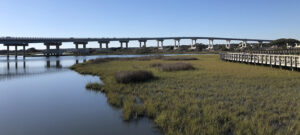
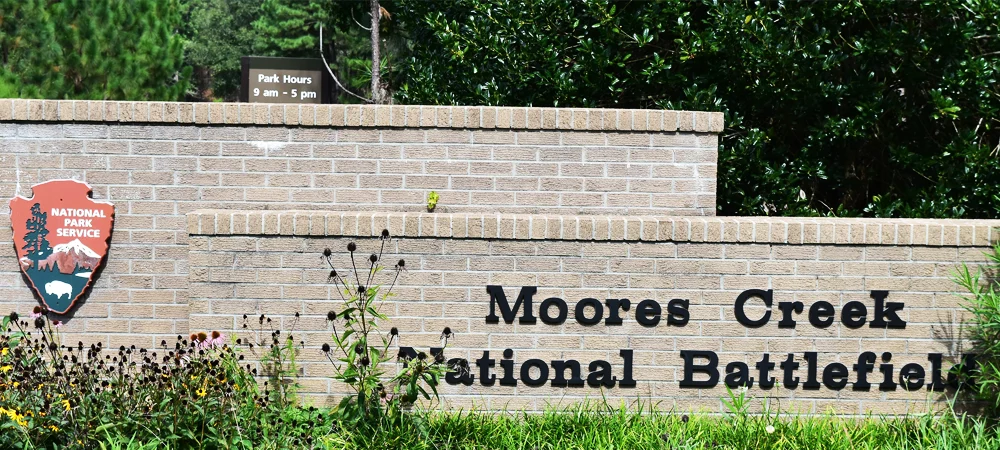
As of Friday, October 3, Moores Creek National Battlefield is closed to the public due to the federal government shutdown. Local reporting confirmed on October 1 that the entrance gates are locked and access is not permitted. The closure includes the visitor center, the short loop trails, the reconstructed bridge area, and picnic spots. Regional outlets reiterated the news and placed it within broader Cape Fear impacts; see WECT’s update for the local picture.
Why is a small, gated site like Moores Creek shut entirely while some big western parks appear “open”? During a funding lapse, the National Park Service operates under the Department of the Interior’s contingency plan. That plan prioritizes health, safety, and resource protection, and it allows (or requires) closures of gated or vulnerable sites where staffing is insufficient for safe operations. You can read the current plan here: DOI/NPS Shutdown Contingency Plan (PDF).
The result in practice is a patchwork nationwide: some large landscapes without gates may remain physically accessible but with no services (limited restrooms, no trash collection, no rangers on duty), while historic sites, battlefields, and small units with controlled access points are fully closed. For a traveler-oriented snapshot of what’s open or closed during this shutdown, see the Washington Post’s guide: “What’s open at national parks during the shutdown”.
North Carolina’s tourism office is steering visitors accordingly. Because Moores Creek’s entrance is gated, state guidance warns that it may be closed during the shutdown and suggests state-managed alternatives in the meantime. See Visit NC’s advisory on alternative experiences during the shutdown and its related news release.
Local Impacts: Daily Routines & School Trips
For nearby residents (Pender County, greater Topsail, Wilmington suburbs), Moores Creek functions like a quiet neighborhood park with a backstory. The closure removes an easy, low-cost outdoor option: no morning loop on the History Trail, no stroller-friendly boardwalks, no quick picnic under the pines. If you typically plan a brisk 30–45 minute walk or bring out-of-town family for a short history stop, you’ll need a substitute until appropriations are restored and rangers return.
For teachers, home-school co-ops, and scout leaders, October is a prime field-trip month. The battlefield’s compact layout, clear wayfinding, and wayside exhibits make it ideal for curriculum-aligned outings on the American Revolution. With the visitor center closed and interpretive staff furloughed, trips are being delayed or canceled. At larger western parks, some grounds may remain open with no programs; that nuance doesn’t help here because Moores Creek’s grounds are behind a locked gate.
For Topsail-area weekenders and coastal visitors, the closure removes a popular half-day add-on that pairs well with fall beach time. Many residents recommend the site to visiting family because it’s short, meaningful, and manageable for a wide range of ages. If you want to keep a battlefield stop on your itinerary, consider Alamance Battleground State Historic Site (state-managed and typically open during federal shutdowns) or another state historic site from Visit NC’s list while federal sites are impacted.
Economic ripples: Moores Creek is not a marquee tourism engine on the scale of the beaches, but it generates steady “stop-through” spending—gas, snacks, lunches—along the US-421/NC-210 corridors. When visitation at a federal site drops to zero, nearby convenience and food purchases dip accordingly. The National Park Service has long documented how park visits support jobs and small businesses in “gateway communities.” For context on that relationship (not specific to this shutdown), see the NPS Visitor Spending Effects page. For a broader shutdown-specific view, the Washington Post article linked above explains how reduced staffing and closures disrupt local trip plans and spending until operations resume.
Friends groups and partners: Across the country, nonprofit partners sometimes step in during shutdowns to keep limited services going at select high-profile sites. That’s not typical for small, gated battlefields like Moores Creek, but it underscores how dependent small units are on consistent staffing and funding. For examples at larger parks this week, see AP’s overview: “Nonprofits and partners step in as parks face a shutdown”.
What You Can Do Instead
- Check state-run sites first: Visit NC maintains traveler guidance and alternatives during the shutdown. Start with its roundup of options, and call ahead to confirm hours.
- Stay local and outdoors: Consider county-managed greenways and parks near Burgaw or Surf City. If you head to game lands or natural areas, review seasonal rules and hunting calendars before you go.
- Verify before you drive: During shutdowns, official park updates may be sporadic. Cross-check a couple sources—local news, Visit NC, and the park’s page (when staffed) for alerts. The Washington Post’s traveler guide is also a good reality check.
A Factual Primer: What is Moores Creek?
Moores Creek National Battlefield (Currie, NC) preserves the site of the Battle of Moores Creek Bridge, fought on February 27, 1776—an early and decisive Patriot victory in the American Revolution. In a brief, pre-dawn clash, North Carolina Patriot militia faced a Loyalist force—many of them Scottish Highlanders—charging across a partially dismantled bridge. From prepared earthworks, the Patriots met the assault with musket and cannon fire. The win ended organized Loyalist resistance in the region and helped set the political stage for the colony’s support of independence a few months later.
For clear, authoritative background, start with the National Park Service’s summary of the battle: NPS: Battle of Moores Creek Bridge. The park’s history pages also lay out the campaign timeline and aftermath: Timeline of the Moores Creek Bridge Campaign. For a concise third-party overview, see the American Battlefield Trust’s page: Moores Creek Bridge (ABT).
Why locals go when it’s open: The site is intentionally approachable. Two short loop trails (the History Trail, which passes earthworks and the bridge site, and the Tar Heel Trail nature loop) make it easy to do a meaningful visit in under an hour. The visitor center normally offers a short orientation film and exhibits, and the wayside storyboards give enough context to make the walk self-guided friendly. Families use it for casual exercise and hands-on learning; history-minded visitors pair it with Wilmington day trips; and Topsail-area residents add it to weekend plans when the weather cools. For baseline operations when the park is staffed, check the NPS pages for Hours and Basic Information—note that normal hours do not apply during a shutdown.
Signature programs: The late-February battle anniversary is the marquee event, typically featuring living-history demonstrations and reenactors. In some years, the park also hosts thematic programs in the fall. For official updates and event calendars once staffing returns, monitor the park’s main landing page: nps.gov/mocr.
The Bigger Picture: Small Battlefield Illustrates a National Story
Shutdowns hit staffed, gated sites the hardest. Where there’s a door or a gate and minimal staff, the safest choice is often to lock it to protect resources and visitors. That’s why Moores Creek is closed while some vast, ungated landscapes are technically accessible (but still lacking services). The underlying policy logic is spelled out in the Interior/NPS contingency plan. Park-advocacy groups make a similar case from a conservation angle; the National Parks Conservation Association has argued in past shutdowns that if a site “has a gate or a door, it must be locked” during lapses to prevent damage or unsafe conditions—see NPCA’s perspective here: NPCA statement.
For our region, the stakes are practical rather than dramatic: a beloved, affordable outdoor option is off the board; teachers and families lose a reliable, hands-on history venue; and the small but steady trickle of stop-through spending pauses along nearby corridors. Individually, those are small inconveniences. Collectively, across multiple sites and several weeks, the impact becomes noticeable in how we plan weekends, structure field trips, and route visitors around our corner of the coast.
What To Watch Next
- Local news: WWAY’s closure report and WECT’s regional impacts story are updating as needed.
- State traveler guidance: Visit NC’s alternative experiences roundup (and news release) lists substitutes while federal sites are impacted.
- National traveler context: The Washington Post’s guide to parks during the shutdown is a good quick check before you go.
- Official park page: When staffing resumes, the park’s landing page will surface alerts and hours: nps.gov/mocr.
Moores Creek is a close-by, low-cost, high-value cultural asset for our region—especially in the fall. Today, the gates are closed because staffing and services cannot be provided during the shutdown. That means no trails, no visitor center, no access until funding is restored. For locals, that interrupts a simple routine; for visitors, it closes off a half-day history detour; and for nearby small businesses, it removes a modest but steady stream of visitor spending. When the shutdown ends and rangers return, it’s worth re-adding to your weekend plans. For official background and battlefield history, start with the NPS pages on the battle and the park’s main site.
Sources referenced: WWAY, WECT, National Park Service (Moores Creek pages; Hours/Basic Info; Visitor Spending Effects), Department of the Interior NPS contingency plan, Visit NC traveler guidance, Washington Post travel coverage, Associated Press, and American Battlefield Trust. All links accessed October 3, 2025.